


Index
- Overview of Cloud Productivity Platforms
- Recent Trends in Cloud Security and Cybersecurity
- Security Features of Google Workspace
- Security Features of Microsoft 365
- Industry Implications: Which Platform Best Protects Sensitive Data
- Best Practices for Securing Cloud Environments
- AlphaKOR’s Role in Microsoft 365 Cybersecurity
Overview of Cloud Productivity Platforms
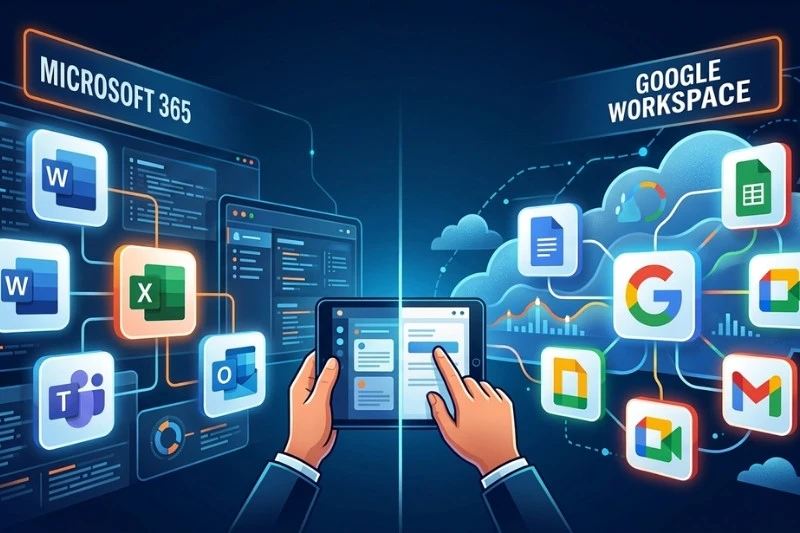
Cloud productivity platforms have become central to modern business operations, enabling collaboration, communication, and access to critical data from virtually anywhere. Among the most widely adopted platforms are Google Workspace and Microsoft 365, both offering email, document management, cloud storage, and collaboration tools. From a cybersecurity perspective, choosing the right platform can significantly influence an organization’s risk exposure, data governance, and compliance posture.
Google Workspace emphasizes simplicity, cloud-native integration, and collaboration through tools like Gmail, Google Drive, and Google Docs. Microsoft 365 offers a comparable suite of tools—including Outlook, OneDrive, SharePoint, and Teams—but also integrates deeply with enterprise environments, identity management solutions, and advanced security features.
While both platforms provide robust capabilities, their approaches to cloud security and enterprise risk mitigation differ significantly. Understanding these differences is critical for businesses seeking to protect sensitive data, maintain regulatory compliance, and reduce exposure to modern cybersecurity threats.
Recent Trends in Cloud Security and Cybersecurity
Recent years have seen a sharp increase in cloud-focused cybersecurity threats, driven by the rapid adoption of remote work, cloud migration, and decentralized IT environments. According to a 2024 report by Gartner, nearly 90% of enterprises now rely on SaaS platforms for at least some portion of their critical workflows, making cloud security a central concern.
Organizations face increasingly sophisticated attacks such as phishing, credential compromise, ransomware, and business email compromise, often targeting cloud productivity accounts. Data from the Identity Theft Resource Center indicates that email-based cloud account compromises alone accounted for over 40% of reported breaches in 2023, highlighting the need for robust platform-level security and monitoring.
Businesses must evaluate both inherent platform security and the ability to implement enterprise-grade controls. Cloud security is no longer merely about data encryption; it includes identity management, device compliance, access auditing, and incident response—areas where Microsoft 365, when paired with an experienced partner like AlphaKOR, offers measurable advantages for enterprise environments.
Security Features of Google Workspace
Google Workspace offers several built-in security features, including multi-factor authentication (MFA), spam and phishing detection in Gmail, and data encryption in transit and at rest. Administrative controls allow organizations to manage user access, configure device policies, and enforce data retention standards.
Despite these capabilities, Google Workspace’s security model is primarily cloud-native and web-focused. While this works well for smaller organizations or fully cloud-based teams, enterprise-scale deployments often require additional monitoring, threat detection, and integration with third-party security platforms to meet complex regulatory or operational needs.
Google’s Advanced Protection Program can mitigate high-risk account compromises, but it is largely reactive and relies on end-user compliance. Moreover, Google Workspace does not natively include the same level of integrated endpoint management, conditional access policies, or detailed audit logging that enterprise Microsoft 365 deployments offer, which may limit visibility and proactive threat mitigation in larger organizations.

Security Features of Microsoft 365
Microsoft 365 provides a comprehensive set of cybersecurity capabilities designed for enterprise environments. These include Azure Active Directory for identity and access management, advanced threat protection for email and collaboration tools, and Microsoft Defender for endpoint monitoring and automated threat remediation. Data encryption, secure sharing policies, and compliance management are integrated across the ecosystem.
Conditional access policies enable organizations to control access based on user location, device health, and risk profile, providing a layer of cloud security unavailable natively in Google Workspace. Microsoft 365 also includes advanced auditing and reporting tools, allowing IT teams to monitor user activity, detect anomalous behavior, and respond to incidents in real time.
The platform’s integration with Microsoft Purview and compliance tools simplifies adherence to regulatory frameworks such as GDPR, HIPAA, and SOC 2. Moreover, Microsoft’s ecosystem is designed to support hybrid deployments, making it suitable for organizations that require both on-premises and cloud data protection.
According to Forrester, organizations using Microsoft 365 with full security configurations experience 40-60% fewer account compromises and phishing incidents compared to environments relying solely on cloud-native protections. This makes Microsoft 365 an attractive solution for businesses prioritizing enterprise-grade cybersecurity and regulatory compliance.
Industry Implications: Which Platform Best Protects Sensitive Data
Different industries face unique cybersecurity challenges that influence platform selection. In financial services, where sensitive client and transaction data is at stake, Microsoft 365’s advanced auditing, conditional access, and secure email protocols provide a stronger compliance and risk management framework. Similarly, healthcare organizations benefit from Microsoft’s HIPAA-compliant data controls and integrated endpoint monitoring, reducing the likelihood of breaches.
The legal industry, reliant on confidential communications and document management, can leverage Microsoft 365’s Teams and SharePoint security features for secure collaboration, while retaining detailed activity logs for audits and regulatory reporting. Manufacturing, logistics, and supply chain companies can use Microsoft 365’s hybrid capabilities and advanced threat protection to secure operational systems, vendor communications, and intellectual property.
While Google Workspace is sufficient for small or medium-sized businesses with limited regulatory obligations, industries handling high-value data or complex operational networks are better served by Microsoft 365’s integrated enterprise-grade cybersecurity features.
Best Practices for Securing Cloud Environments
Regardless of platform choice, organizations should adopt comprehensive security practices. Enforcing multi-factor authentication across all accounts, implementing conditional access policies, monitoring unusual user behavior, and conducting regular cybersecurity training are critical measures. Email threat simulations, phishing tests, and ongoing user awareness programs enhance protection against compromise attempts.
Data governance policies, including role-based access control, secure sharing, and data retention standards, should be consistently applied. Incident response procedures must be defined and tested to ensure rapid remediation in the event of compromise or unauthorized access.
For organizations using Microsoft 365, leveraging native auditing, Microsoft Defender for endpoint security, and compliance management tools simplifies these best practices. By combining platform capabilities with procedural rigor, businesses can achieve both proactive and reactive defense against cloud threats.

AlphaKOR’s Role in Microsoft 365 Cybersecurity
AlphaKOR Group provides expert guidance for businesses deploying Microsoft 365, ensuring that organizations maximize the platform’s cybersecurity potential. AlphaKOR specializes in configuring Microsoft 365 to leverage conditional access, advanced threat protection, endpoint security, and compliance management.
They work closely with IT teams to monitor for suspicious activity, remediate vulnerabilities, and respond to incidents in real time. Their expertise extends to integrating Microsoft 365 with broader enterprise security frameworks, enabling hybrid deployments and compliance with complex regulatory requirements.
AlphaKOR also provides employee awareness programs, simulating phishing and other cloud-based threats within the Microsoft ecosystem. By combining platform optimization, proactive monitoring, and training, AlphaKOR ensures that Microsoft 365 delivers superior protection for sensitive business data, providing measurable advantages over alternative cloud platforms.
Conclusion
While both Google Workspace and Microsoft 365 provide essential productivity tools, their approaches to cybersecurity and cloud security differ significantly. Microsoft 365 offers advanced enterprise-grade protections, integrated monitoring, and compliance features, making it better suited for organizations with complex operational and regulatory requirements.
Partnering with an experienced provider such as AlphaKOR further strengthens Microsoft 365’s security, ensuring that businesses can fully leverage its capabilities, prevent compromises, and maintain operational continuity.
For organizations prioritizing robust cybersecurity, regulatory compliance, and long-term resilience, Microsoft 365, supported by AlphaKOR, offers a superior solution to secure critical business operations in the modern cloud environment.